
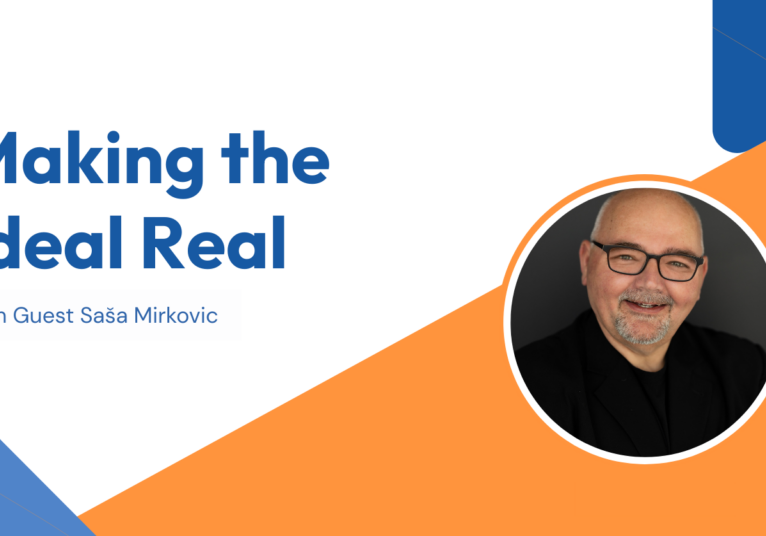
In this episode, Ryan Goulart welcomes Saša Mirković entrepreneur, coach, and founder of Inspire Network to explore how surviving the siege of Sarajevo, embracing values-driven leadership, and creating tools like Tug Cards have shaped his life’s mission: facilitating change and unlocking human potential.
From wartime lessons on resilience and purpose to modern insights on team dynamics, Saša shares how values, self-awareness, and intentional leadership can transform both individuals and organizations. Through powerful stories and practical tools, he reveals what it means to fight evil by doing good and how to build teams that thrive on trust, alignment, and shared genius.
Surviving Sarajevo: Purpose Born from Adversity
Saša reflects on living through the siege of Sarajevo in the 1990s and how it shaped his worldview. Facing death repeatedly led him to a defining choice: to fight evil by doing good with every breath. Inspired later by Viktor Frankl’s Man’s Search for Meaning, Saša came to see freedom as his core value something no one could take unless he surrendered it.
The Alignment Model and Values in Action
Saša shares how his early encounter with Doug Lennick at American Express sparked his lifelong commitment to values alignment. He explains his personal ritual of writing an annual “What I Want for Myself” letter, a practice that has helped him stay grounded in freedom, family, leadership, integrity, and health.
The Birth of Tug Cards: Talent and Unique Genius
Born out of a moment of organizational adversity, Tug Cards combine values, Colby, Working Genius, and PrinciplesUs assessments into a single, accessible tool for leaders and teams. Saša explains how Tug Cards:
- Shift conversations from judgment and bias to talent and genius.
- Create vulnerability, trust, and stronger relationships among team members.
- Provide leaders with actionable insights to build and sustain high-performing, “elite” teams.
Building Trusting Teams
Saša outlines his framework for understanding teams:
- Teams in name only
- Above-average teams (where most teams place themselves)
- Elite, trusting teams (where something truly special happens)
For leaders aspiring to elevate their teams, Saša emphasizes the importance of values work, intentional conversations, and tools like Tug Cards that make hidden strengths visible and usable.
Family Values and Leadership Beyond Work
Saša shares how his family practices annual “values meetings” during the holidays using values cards to identify what matters most and collectively choose five guiding principles for the year ahead. It’s the same practice he brings to the leadership teams he coaches, proving that values alignment is as powerful at home as it is in business.
From surviving war to building trusting teams, Saša’s story is a testament to resilience, purpose, and the power of aligning genius with values.
Transcript
Ryan Goulart (00:02.069)
I have with me today, Sasha Mirkovich. Sasha, welcome to making the ideal real.
Saša Mirković (00:09.979)
Thank you.
Ryan Goulart (00:11.822)
I know you’re a long time listener and I’m happy to have you here on our program. First question is, what does making the ideal real mean to you?
Saša Mirković (00:26.994)
So might as well put this on record When I was when I was a first year advisor at American Express financial advisors and I was in Chaskatraz for the training I had 7 a.m. Daybreak with Doug and You know, I was in my late 20s early 30s 7 a.m. Appointments were not really
good ones because you know, you’re in Chaska, you’re doing things and partying on and you got to get up in the morning and meet this guy, Doug. And, somebody told me, you don’t want to miss that appointment. So begrudgingly, I went to that session and, Doug said something to, to all of us that,
I told him this couple of times has changed my life completely. said something to the effect, what do you want for yourself? Think of this as a you’re an actor in a movie. That movie is movie of your life. You get to write the script. You get to direct it.
And you’re the main protagonist. And if you don’t like the movie, you just change the script and make it to be what you want it. It was like mind blowing thing. was like, Whoa, whoa, whoa, whoa. What happened? And, you know, he talked about the alignment model. It was the first time I did my values cards exercise.
And, last Christmas or I usually send my witty wiffy on January 2nd every year. And I sent the 23rd edition of the witty wiffy to about 280 people on my mailing list. my team members, my colleagues, my coaches, Doug, Ray, others, and, it kind of starts with.
Saša Mirković (02:54.085)
This is what my life should look like in next year. These are things that are important. And as Ray and I often talk, I write it out, send it out, and somewhere halfway through the year, I look at what’s going on. And I just did that in preparation to our recording. And more than half of the things have already happened. And I’m working hard on, you know, getting some important things like finishing my book.
Ryan Goulart (03:24.173)
Yeah.
Saša Mirković (03:24.219)
and so forth so to me making idea real is sort of like a way of living it’s alignment with your My core values beliefs I often tell people If you’re in your 20s and 30s, you should do values cards exercise at least a couple of times a year or
as often as you have big things happening in your life and then in your 40s and 50s at least once a year and once they stop changing you might want to put them on your license plate so if you look at the New York license plate with FFL IH that’s my car freedom family leadership integrity health
Ryan Goulart (04:16.024)
That way.
Ryan Goulart (04:20.552)
I didn’t know you actually went through with that. That’s awesome. So many directions that we can go. I’m wondering to first place, let’s go back in time a bit because you went, you hit Chaska. I was 20 some odd years ago. Let’s go a little further. And one of the things that has been really interesting to learn about you is your understanding of human behavior.
Saša Mirković (04:25.165)
I did actually have a picture to send you.
Ryan Goulart (04:48.582)
in situations that aren’t always that great. And what I mean by that is that you happened to escape the Battle of Sarajevo and you came to the United States. What did that environment teach you about how humans operate, what they do, why they do what they do?
and how did it influence your understanding of what you do now?
Saša Mirković (05:20.901)
Well, I want to make one edit to your question. I did not escape. I survived. I was there for the duration from the very beginning to almost completely dear end. I left maybe three months before the siege of Sarajevo was officially lifted. So I was there for the entire time. Wow.
Ryan Goulart (05:24.395)
Okay.
Okay, there you go.
Saša Mirković (05:50.861)
in the war zone.
lichen pandemic.
things get highlighted, accelerated, supercharged. life lessons to transpire, the life lessons that transpire over a decade or decades in real life in the war zone, it happens in few months. What am I talking about?
I vividly remember time during the siege of Sarajevo when I was thinking that good old saying, what goes around comes around. You can actually see that expedited come back, especially for people that are doing the bad things. The bad things happen to them real quick. And it’s so quick that you can
connect the dots and was like, oh my God, this like all of these things happen. I just to provide some context for your listeners, I was 26 when war started. I wanted to be an actor. I studied philosophy. I was a method actor. So I studied human behavior and from the context of the stage and theater and so forth. So when war started, it was like, oh my God, it’s like
Saša Mirković (07:24.962)
All this stuff is happening right in front of me. So one lesson I mentioned is like things get things happen faster really fast. So the first time I was sort of lucky to be spared in the siege of Sarajevo was like within first couple of months of the war and
it sort of becomes like, you know, you hear people talk about why did person next to me die and I survived? I had real struggle with those questions, the survivor guilt or whatever you call that. And,
Ryan Goulart (08:10.583)
Yeah.
Saša Mirković (08:14.87)
I remember around Christmas time in 1992, yeah, Christmas of 92, I was sitting down in a basement of the head office of Islamic Society of Bosnia, translating for a convoy that is bringing food to people of Sarajevo from Paris.
from this broken English into Serbo creation and the head Imam and a bunch of other religious leaders were in the room and I remember translating knowing that all of those people spoke English better than I did yet still like that, you know, it’s kind of weird feeling and we were
Ryan Goulart (09:06.604)
Yeah.
Saša Mirković (09:10.37)
The building was under attack. We started to get bombed and like, you know, it went for a couple of hours. We were in a basement. We’re close to the front lines. know, God knows what would have happened if Serbs took over that part of town and building and so forth. But halfway through that, one of the religious leaders pulled me aside and say, Sasha, I just want to tell you some.
I was like, yeah, he was like, you have nothing to worry. Allah, he’s going to protect you. And I’m not Muslim. And I’m like, okay. And I said, why do you say that? He was like, I saw what you did a couple of days ago. As people were killed in front of our building on another part of town, you and your driver came back three or four times to pick up the body, carry the wounded to get
Ryan Goulart (09:52.065)
Yeah.
Saša Mirković (10:09.242)
people on, it was like when you do good things Allah is on your side and that was something that kind of kept me going after 28 times of being face to face with why did I survive I stopped counting I was like well there probably is a bigger reason why I’m being spared so
My purpose is now to figure out what that is and why that is. About six, seven years later, somebody recommended reading Man’s Search for Meaning. I was like, yep, I lived this. So I give that book to folks.
Ryan Goulart (10:59.522)
Yeah.
Saša Mirković (11:05.562)
a copy of that book to all of my kids, my wife, people on the team, when they say, how do you survive what you’ve gone through? I was like, it’s all in the book. And I do believe that, you know, freedom is my number one value. And I define freedom as air. I like nobody can take my freedom. I will have to surrender it.
Ryan Goulart (11:27.436)
Hmm.
Saša Mirković (11:35.268)
There are so many different places where I was like, how do I get out of this? And like, like in the book, was like, well, if that’s what it is going to be, that’s what it’s going to be. I’m just gonna live my life the way that I want it. And it was in that moment when things shifted. I, I believe I survived and continued to work.
because I chose in the worst days of war in Sarajevo and for me that was like May 27th, 1992 I was a couple of minutes late to the bread line massacre if you heard about it during that day I was like, you know how do you carry on from this? So I chose that day that I’m gonna fight evil by doing good
with every breath I take, every hour, every day, every week, every month, every year, as long as I live. And then I found leadership as a sort of like an opportunity to leverage up that fight for good. And I was like, this is really cool. So I don’t know if I answered your question, it’s, it’s, that’s how, that, that’s how, that’s like,
Ryan Goulart (12:53.652)
No, no, you did. You did a great job.
Saša Mirković (13:01.475)
Just about everything that I believe now and do is rooted somehow in those four years of war in Sarajevo.
Ryan Goulart (13:09.324)
Well, and I appreciate you sharing all of that. And it is a conflict that definitely shaped, I mean, shaped your life, shaped a region’s life.
You know, one of the things that’s, it’s a really helpful context for a lot of the things that we’re going to talk about today, as we start to look at areas of how you, you have a shirt on right now for those that can’t see that says, inspire network. We fill us, facilitate change. And that’s how I’ve often seen you, Sasha, as this person that has helped facilitate change in various different ways, following your curiosity to places that help kind of understand what people do.
So you don’t mind, as you kind of think about human potential and the change that it invokes, particularly in team dynamics, how are you deploying a concept that you also have a tugboat behind you too? So what are tug cards, what do tug cards do, and how do they help kind of get to that root cause of just understanding people through leadership lens?
Saša Mirković (14:17.369)
So.
There was a period of time when I had the privilege of being coached by Doug. And during that period, he indirectly in his own way, sort of like made me define my own purpose. Not because he said you should do that, but the way how he defines his, I found my definition to be clunky, boring, not really. was like, and in order to
Ryan Goulart (14:41.525)
Mm-hmm.
Saša Mirković (14:50.765)
get there, did value calling cards exercise, Richard lighter and like, and as I went through the exercise, facilitating change came out to be my number one calling card. It is the calling card that basically engages all of my talents and geniuses. And it’s sort of like gives me the
Ryan Goulart (14:58.444)
Mm-hmm.
Saša Mirković (15:19.971)
the most joy, the most satisfaction, and also gives me the sense of I’m actually doing something important and I’m actually doing things in a very practical way. During one of the visits to our office, Doug said to me, like, Ray says I should be careful what I say in front of you. I was like, why? He said, because you’re gonna implement it.
Ryan Goulart (15:49.132)
You
Saša Mirković (15:49.85)
And I think that statement is very true. I actualize my genius and talent by actually doing things, building things, creating systems and so forth. So the tug cards were born from another adversity moment in 2018. My team and I went through what I now call talent density event where my former business partner and I split up.
and 80 % of the team went with him and Maria and I retained 80 % of the clients. And we found ourselves with a very small crew of people, you know, bearing down to the most important things to get things going. And we realized that we could actually handle 80 % of the business with 20 % of the people. Not for a long time, but it was like, oh my God, the…
Ryan Goulart (16:44.94)
Mm-hmm.
Saša Mirković (16:48.953)
the teamwork, the energy, the cover and move, like all these things were all of a sudden reminiscing me or reminiscent of the times where I spent in some elite teams from military to rugby to theater and so forth. was like, this is the thing that I’m looking for. And what I wanted to do is I wanted to figure it out the way
How do I keep that talent density, that chemistry, that special feeling always there as we scale the business? one of the things that I learned from various different authors and Ray Dalio in his book, Principles, talks about baseball cards that they designed for members of Bridgewater team. And I was like, baseball, that’s brilliant. So I couldn’t find…
his baseball cards anywhere. So I created mine. And the very first thing in my baseball cards were values, because values gives you idea of the alignment of the belief and all that stuff. The next assessment we included there was Colby A index, because it gives you idea of your innate drive and all that stuff. But those two
Ryan Goulart (17:50.038)
Mm-hmm.
Saša Mirković (18:14.71)
did not seem to be enough because there were some other things going on that I could not really explain it and so forth. So we added Working Genius, six Working Genius by Patrick Lanzioni and then also Principles Us by Adam Grant and Ray Dalio. So the tug cards, I’ll explain why tug cards in a second, are this digital tool that
puts all these four things together and give the essential reads to a leader to be able to.
Think about human interaction, human activity in context of talent and genius rather than judgment or guilt. So, just recently I talked to one of our clients and he was like, baseball cards, you need to change the name. I’m like, why? He was like, because it’s nothing with baseball. I’m like, okay, good reason. So my team and I worked through a name and tug.
talent and unique genius seem to be something that resonates with the tugboat. And, you know, the tugboat as a logo is when you change the ships around, you use tugboats. You kind of apply to just around the, just a right amount of pressure in the right spot for the right time to kind of things, turn things around. And when I think about Inspire Network and us as a coaching business, that’s what we do for our clients.
you know, my newsletter is called Nudge because we’re nudging. it’s like all of these little things are, you know, applying small amounts of pressure over time and getting things around over long, get the desired transformational growth impact.
Ryan Goulart (20:12.009)
Yeah, it’s, it’s a both concepts and how you articulate the experience that you went through in 2018 of understanding and a feeling that I can feel the emotion through what you’re sharing of like, yeah, like, and that people want to be a part of a team like that. So labeling it as like a town density moment of like, you’ve all have kind of
could join all together to go tackle this out and make this happen in pursuit of your support of your clients and the business. mean, that’s awesome. So when you have your tug cards and you have this information in part of your team, do team members start to converse about it? How do you share information and make those reads so that the talent density does stay afloat? I used that afloat.
Saša Mirković (21:03.136)
Yeah, it’s actually been a fantastic journey in a sense. I would say there’s probably three main things that happen. Probably the first one is understanding the person in front of you as objectively as you can. So it’s not, if you look at my tug card,
Saša Mirković (21:33.676)
Excuse me, it’s not gonna be what Sasha said. It’s like, these are my values. This is my working genius. This is my Colby. These are my archetypes. And I spend about 90 minutes giving answers to psychometric questions to come up. So this is as objective as one can be. You know, you and I have known each other for a long time.
Galvanizing is one of my working geniuses and I love my own stories. I think they’re phenomenal. So, and I made a lot of mistakes because of believing my own press. So over time, I’ve learned that I need to counterbalance my excitement and galvanization with reality and having scientific data points.
is to me like reality check. that’s the first part. Like it’s a reality check. The second part is as you approach leading people and on elite teams, everyone is a leader. On our teams, teams that we coach, we basically establish the standard that everyone on this team is a leader. So we’re gonna teach you
Ryan Goulart (22:31.177)
Mm-hmm.
Saša Mirković (22:57.912)
to be better leaders. as you’re going into conversations with folks and so forth, you should be equipped to understand who you’re talking to. So that objective piece that we just talked about becomes sort of focus on talent and unique genius rather than judgment. What do I mean by that? If you go in a conversation without a tug card, most of us are hardwired
to judge before anything.
I mean, you have a degree in understanding human brain that like, it’s like, gonna judge. Carl Jung says judgment thinking is hard. That’s why everybody’s judging. So to me is like the whole cloud of judgment that people carry with them in relationships and one-to-ones and, you know, embracing conflict and all the other stuff is just like, sometimes I feel like it’s a miracle that we survived as a species for as long as we have.
Ryan Goulart (24:01.108)
Yeah.
Saša Mirković (24:01.462)
because we judge others based on their actions and we judge ourselves based on our intent and often those are not nearly close and when you have a tug card in front of you you trick your brain out of judgment or guilt into action towards accomplishing the mission and the third component
when I coach tug cards with the teams, especially in the beginning, in a way that we coach that it becomes this oxytocin bomb experience where people revealing their alignment, their energy, their drive, their attitudes, telling other teammates about who they are. There’s this
joint vulnerability that goes on that adds layers upon layers upon layers upon layers of trust and as you know everything moves at the speed of trust so if you have a high level of trust you can do just about anything so tug cards in its third way to be used are a very powerful way of planting and renewing trust
on a very basic organic level inside of the team. And I’m sure you have like scientific explanation about that. Like I’ve seen that with my own eyes, experienced that through my heart and the teams that I work. And it’s like, I know how to recreate this. Let’s keep going through and get new exposure and with the tug cards. Now, one last thing I’m gonna say this.
Saša Mirković (25:58.804)
It’s helpful that humans forget things very quickly. So me knowing your tug card at two o’clock this afternoon does not mean that I will remember it in like three hours. That’s why we build an app that will allow you to have a tug card available 24 seven about any member of your team. So it’s a very practical, pragmatic way to implement some of the things that, you know,
you and I know very much about.
Ryan Goulart (26:30.622)
Yeah, and it’s a really interesting observation too when you have teams.
like assuming that they’ve never done something like values or working genius or Colby or I’m not familiar with the other one, but I know both of those authors. it’s, and I’m thinking, I’m reflecting on what you’re sharing to it back, back to your historical context and the environment that you, that you survived. You know, it’s really interesting to have some of that learning encapsulated on a T on a card that can help you make decisions.
better, faster, more efficient. And it also gives you a little bit more context too, so you don’t rely so heavily on bias, because we all have it. We all use it. It’s just easy. It’s there for us to fight or flight. We’re gonna use bias and habit to help us make those decisions. So what you’re actually sharing is that being more intentional about it and actually aligning to
to something that people, they told you that they value these things. They told you that these are the things that this is where they derive energy or this is their working style. Use it.
Saša Mirković (27:52.47)
Yeah. I’m glad you said that because, you know, yes, I’m talking about biases. I just call it a judgment. And, and like, you know, I remember as we were coaching people to embrace conflict in a healthy way, I was like, you got to suspend judgment or turn off your biases. We all have the biases and, tongue hearts will actually help you be actionable because going back to, you know,
my roots and going back to Sarajevo. I was 26 when a cabinet level minister asked me and two of my colleagues and I was the youngest of the three to build agency for humanitarian aid and distribute humanitarian aid to 500,000 people in Sarajevo during the war and under siege. And the reason why I was qualified
is because I translated textbook and taught a semester of logistics. And it was like, okay, you’re now an expert, go do it. I was like, my God. So, and I found myself in situations where I’m in the middle of conversations with very politically powerful people. They’re coming at each other, at each other’s throat. And I’m like,
You guys are talking the same thing. So sometimes I would say, can I interrupt? Yeah. Are you saying this? Yeah. Are you saying this? Yeah. Does this mean this? Yeah. Does this mean it? Can you see that it’s the same thing? And they’re like, so the, the judgment, the biases, the emotional, the ego clouds our brain and thinking, this is ranger, my dog coming in. and,
Ryan Goulart (29:49.063)
Nice.
Saša Mirković (29:51.625)
And tug cards actually help us stay focused on the mission. Like, you know, it was, I don’t know, two years before I took my first day off because I felt guilty, taking day off because people of Sarajevo have to eat. And I felt personally responsible to make sure that they get their food. And, did I need to work seven days a week? No.
It was like just thing that I created in my own psyche that that was something you need to do. So I have been mission driven.
for most of my life. if I learned something, one of the first things I asked was like, so what? How would I use this? How can I make things better with that? I’ve done assessments. I probably have like a drawer full of them. And we chose those four because
I believe they’re the most essential for a high level teamwork. And again, the trick is not in assessments. The trick is actually in using it. Trick is in focusing on people’s genius and talent as you’re working through things rather than going on bias or judgment.
Ryan Goulart (31:28.083)
Yeah. What would be some, like, as you kind of think about wrapping this up, what are, what are some things that leaders, advisors, people in different industries, what are something they could do to kind of,
think about like what are the next steps? What are the things that that you Sasha would recommend for someone who’s looking for those teams that you described and may have not have had the same lived experience as you, but they’re looking to try to accelerate their team in a bit. What would be some of your like quick takeaways?
Saša Mirković (32:03.243)
Yeah. So I’ve introduced a narrative of three types of teams, team in the name only above average team, which is sort of homage to Garrison Keillor and News from Lake Willbegon where all the men are strong, all the women are good looking and all the children are above average. So above average teams, most teams think of themselves above average, but the lead teams are the ones that
Ryan Goulart (32:24.862)
Mm-hmm.
Saša Mirković (32:32.542)
Simon Sinek calls trusting teams, the teams where there’s something special. And I think the very first thing, if you think about change and levels of change is knowledge that there are teams that are a lot more effective, a lot more inspiring and so forth than just the average team. The second thing would be, you know,
shifting the mindset and I want to be that or I want my team to get to that level and And then right after that is sort of like okay, what are the things I can do so I think we’re gonna provide some links for you there’s there are components of our website about tug cards where you can understand learn more about it and
Perhaps engage with us to kind of help you build tug cards for your own team. We usually do this in cohorts of 20 people and that doesn’t necessarily mean that all 20 should be team members. I often do this for leadership teams and their spouses. Why? Because my wife and I had tug cards for a long time.
and our relationship has gone significantly better because of understanding our talents and unique genius, just like, you know, intercommunication, understanding who we are. So, and I mean, even if you don’t do anything with us, I would say, do your value cards, review them. know, value cards are very first thing that we will do.
with the tug cards and start having what coach K calls values meetings. So every year at Christmas, the Mirkovic family has a Christmas ritual and that Christmas ritual is we all do our value cards after we open presents and then we have values meeting and values meeting is
Saša Mirković (34:58.44)
Everybody shares their own values. Have they changed? What changed? Why? And then we select the five values for our family for the next year. We do the same thing for our coaching clients and teams that we lead.
Ryan Goulart (35:19.953)
Awesome. Well, Sasha, thank you for coming on to Making the Ideal Real.
Saša Mirković (35:26.528)
Thank you. I appreciate the opportunity and I feel like I made it. I’ve been on the podcast now.
Ryan Goulart (35:31.882)
Thank you.